
5. How does food and drink affect continence in dementia?
Key points

Eating with dementia
In the early stages of dementia people may be fully independent and able to manage their diet by themselves. As their dementia increases they may:
- Forget to eat and drink.
- Have a smaller appetite.
- Find swallowing difficult.
- Hide food instead of eating it.
- Think that they have had a meal when they haven’t.
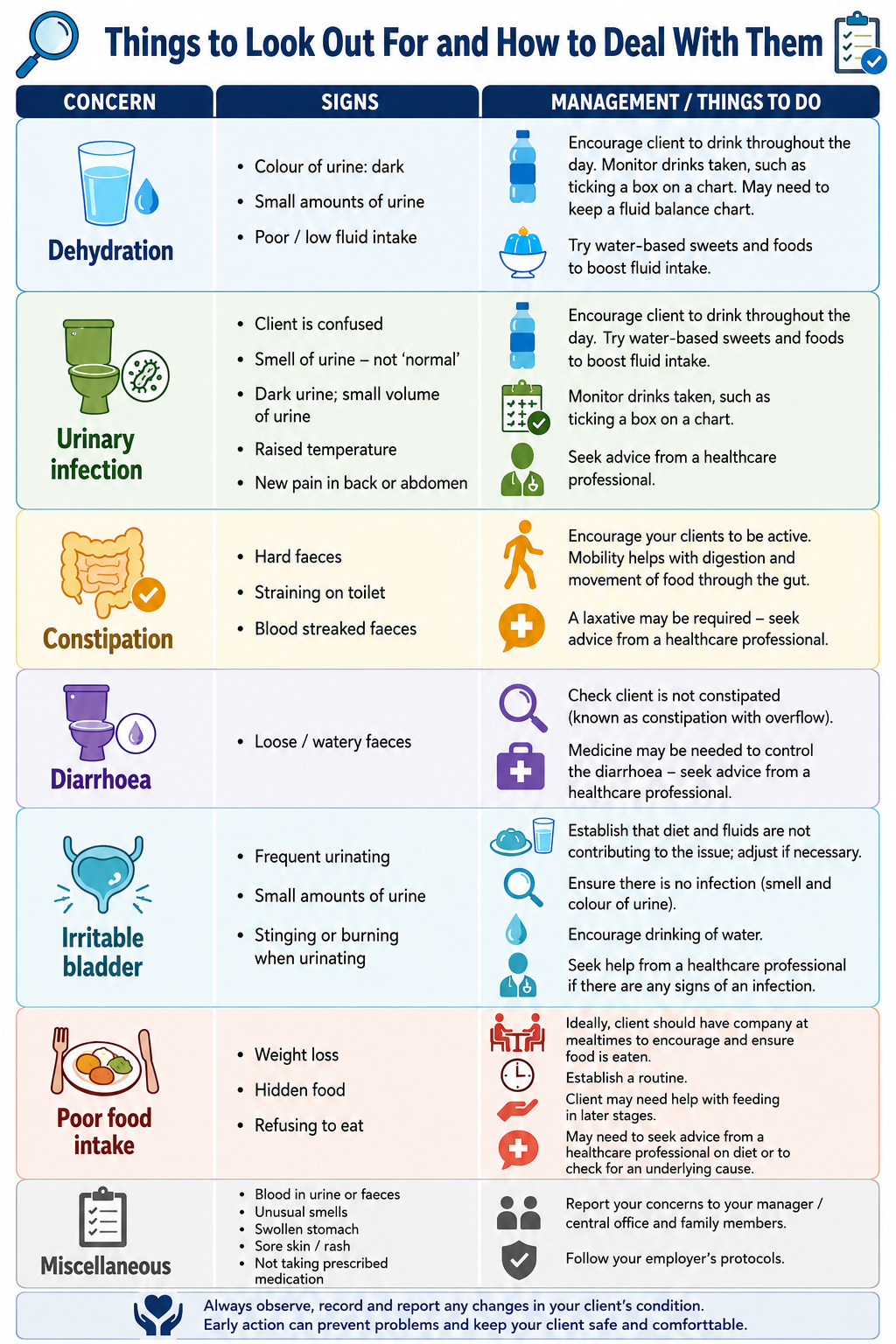
Help to set a routine for meals and check that your client is eating them. A restricted or poor diet can cause constipation: watch for people’s facial expressions (grimacing/pain) when trying to pass faeces, becoming restless or having a smaller appetite than usual. Some people prefer to eat their meals in the company of others and will not eat if they are alone. Inform your manager if you have concerns about your client’s nutrition or bowel habits and keep their family informed of your concerns.
Drinking
To avoid accidents, people may drink less and then become dehydrated and constipated. They may also get a urinary tract infection (UTI), which can make older people confused. Encourage regular drinks during the day and then reduce the amount they drink up to 3 hours before bedtime.
- Encourage your client to drink little and often.
- Encourage your client to drink at mealtimes.
- Aim for 5-8 cups/glasses of fluid each day: may need to increase input in hot weather.
- Use prompts, like a chart with 8 drinks that they can tick off, to help them keep track of their drinking.
If your client struggles to drink enough fluid they may be tempted by eating or sucking on sweets that are designed to hydrate, such as Jelly Drops, and water-rich fruits such as melon.
Food and drink irritants
Certain foods and drinks can irritate the bladder causing more trips to the toilet, especially at night. Reducing their intake may help a client to control their continence. Common irritants include:
- Caffeine in tea, coffee or cola.
- Fizzy drinks.
- Citrus fruit juices - orange and lemon.
- High amounts of vitamin C.
- Spicy foods.
Try limiting these one at a time if symptoms appear. Taken in moderation they may not cause a problem. If these are favourite drinks or food, you may need to compromise - it is better your clients eat and drink them than become dehydrated or unwilling to eat.
Keep active
Remind your clients to move about regularly if they physically can, rather than spending long periods of time sitting down. Encourage them to eat fibre-rich foods such as fruit, vegetables, nuts and seeds. Being physically active and eating a fibre-rich diet will help their digestion, avoid constipation and also encourage them to make regular visits to the toilet.
As their dementia progresses, your client may become bedbound. Inactivity slows down digestion and the natural gut movement that helps to move food through the bowel. Constipation can be difficult to avoid and faeces may get hardened or impacted in the bowel. Leakage of watery faeces around this faecal ‘plug’ can appear as diarrhoea. If you are worried that this may have happened, do seek help from a healthcare professional.
Practical Tips
- Encourage your client to eat/suck on water-rich foods or sweets if they are not drinking very much.
- Reduce drinks up to 3 hours before bedtime to reduce the need to pass urine in the night.
- Seek help from a healthcare professional if there are signs of infection.