
8. How can I maintain my client’s personal hygiene?
Key points

Skin care
Your client may find it hard to wipe or wash themself properly after using the toilet or being incontinent.
- Urine or faeces left on the skin, or wearing wet/soiled clothes for too long, can make the skin sore. This is called Incontinence Associated Dermatitis.
- Sitting in wet incontinence pads for most of the day can cause the skin to breakdown.
- Faeces left regularly under fingernails may cause them to become infected.
- Sore skin can be itchy, and scratching may cause the skin to break.
- People with dementia may not notice if their skin is sore.
What to do:
- Check their skin regularly to see if it is red, inflamed, broken, looks infected or irritated. For people with darker skin tones, this might appear purple/bluish.
- Wash skin with a gentle cleanser, pat skin dry and use a barrier cream.
- Avoid fragranced wipes or talcum powder.
- Keep their fingernails short and clean, especially if scratching is a problem. You might turn this into a regular pampering/manicure session.
- Long toenails can catch on incontinence pads and cause them to rip. Encourage your clients to maintain good foot care with regular podiatry visits.
- Suggest your client uses two different coloured flannels, one for the bottom and the other for the rest of the body.
- Tell your manager straight away if you see:
- Red or pink skin (this can be harder to spot on darker skin tones).
- Broken skin.
- A skin rash.

“I had a client who would often hide her faeces. You could change and clean and everything, but if her fingernails were longer then you could see faeces all over her hands and under her fingernails”.
Keeping clean after using the toilet
You can find more practical tips on this website (Section 5 for family and friends). It covers:
- General advice on personal cleaning.
- Wiping after using the toilet.
- Cleaning up urine or faeces after accidents.
- How to care for a man.
- How to care for a woman.
Different cultures may have their own ways of cleaning after using the toilet. For example, some people wash with water instead of using toilet paper. Always check with your client or their family what they prefer.
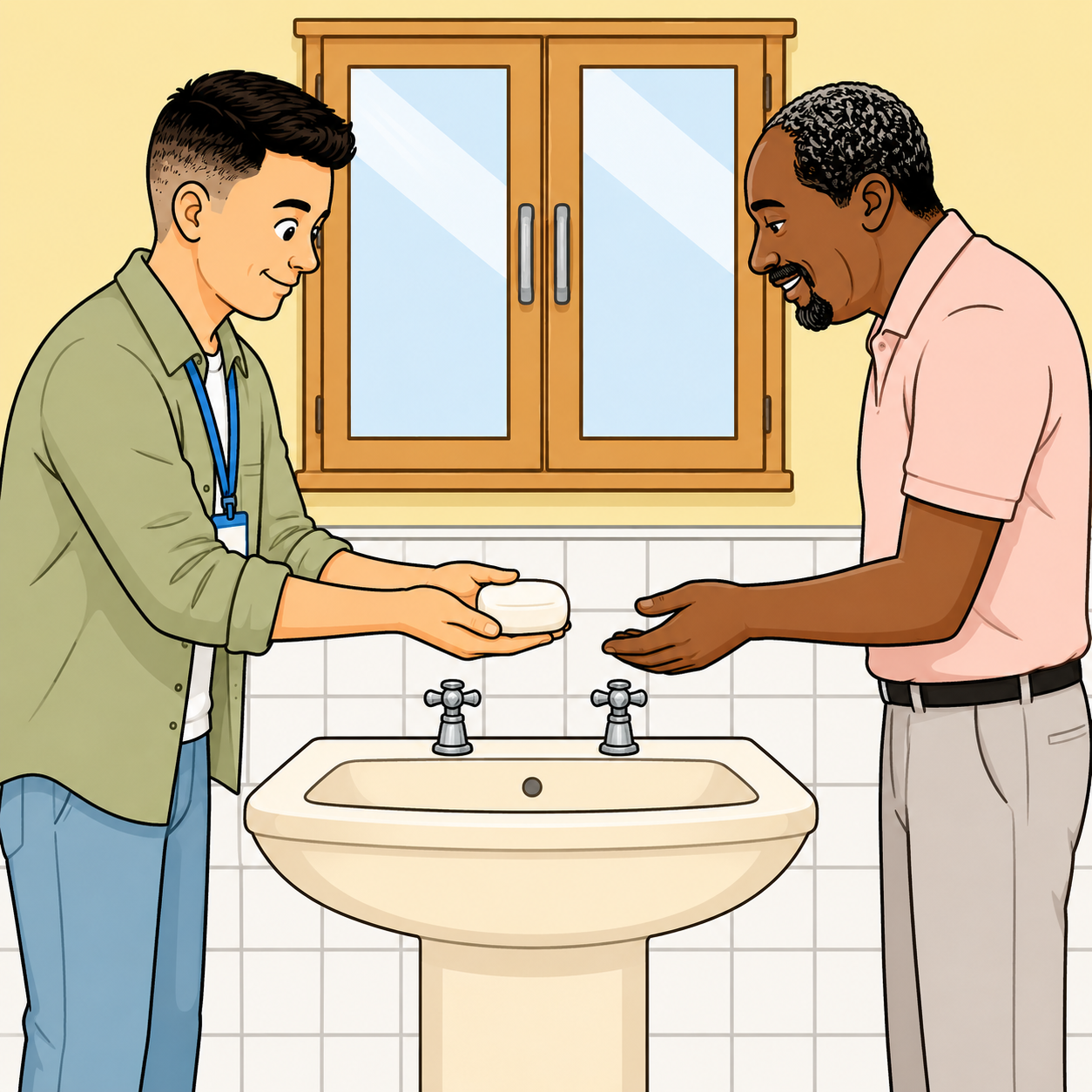
Think about the sensory experience
Receiving continence care is challenging, but there are sensory details to think about that could make it less unpleasant for some people. For example:
- Is the water the right temperature for them?
- Can music or the radio be used as a distraction?
- Are there hand lotions or perfumes with scents that the client particularly likes?
- Are towels and other materials comfortable on the skin?
Visual prompts
Reminders and signs can help people stay independent for longer. You could suggest to your client they:
- Label cupboards and drawers to show what’s inside.
- Use signs or notes to remind them to do things, like washing their hands after using the toilet.
“I saw a new client the other day. All the cupboards were labelled around the house very clearly, what was in them from towels to soap, to this, to that and the other. And the client was really proud of that, and it had really helped with the routine”.
Skin irritants
Delicate skin can get sore from some fabrics, soaps or washing products. If your client suddenly gets a rash, check if they have started using new washing powder, soap or skincare products. These might be causing the rash. If not, they may just need to switch to gentler products made for sensitive skin.
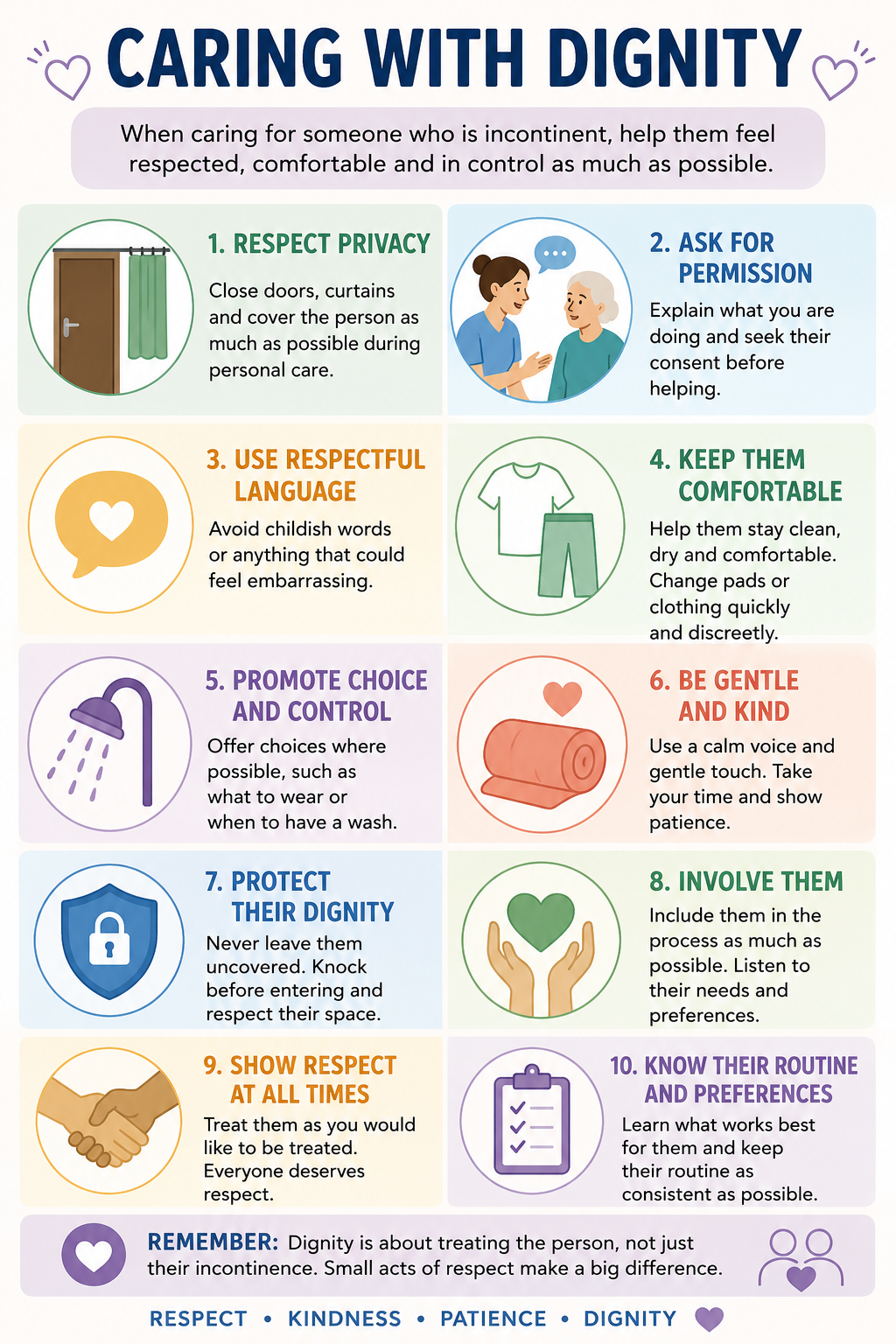
Practical Tips
- Check skin regularly for signs of infection or irritation if your client has regular leakage.
- Keep fingernails short and clean.
- Visual prompts (e.g. signs and labels) can help your client maintain their hygiene.